
The Mechanism, Which Nobody Explains
Heat escapes from the house into the roof assembly. That heat melts the underside of the snow sitting on the roof. The meltwater runs down the slope until it reaches the eave — which overhangs unheated air and is therefore cold — and refreezes there. That ridge of ice grows, and the water backing up behind it finds its way under roofing designed to shed water downhill, not to hold it.
Nothing in that sequence depends on what the roof is covered with.
So does metal help? Yes, genuinely — by a different route. A metal roof sheds snow, and snow that has left the roof cannot melt on it. Less fuel means smaller dams. That is a real benefit worth having.
And it is not a fix. A badly air-sealed, badly ventilated house under a metal roof still forms ice dams. We have seen it on houses whose owners were told otherwise by whoever sold them the roof.
The actual fix, in order: air-seal the ceiling plane so heat stops getting into the roof assembly — light fittings, the attic hatch, plumbing stacks, wiring penetrations, the top plates of interior walls. Insulate adequately, especially at the eaves where it is usually thin or compressed. Ventilate so the underside of the deck stays close to outdoor temperature. Then roof.
Do it the other way round and you have paid five figures for something that does not solve the problem you bought it for. That is the single most expensive mistake available in this trade, and it is sold every winter.
Snow Retention: Metal Sheds Suddenly
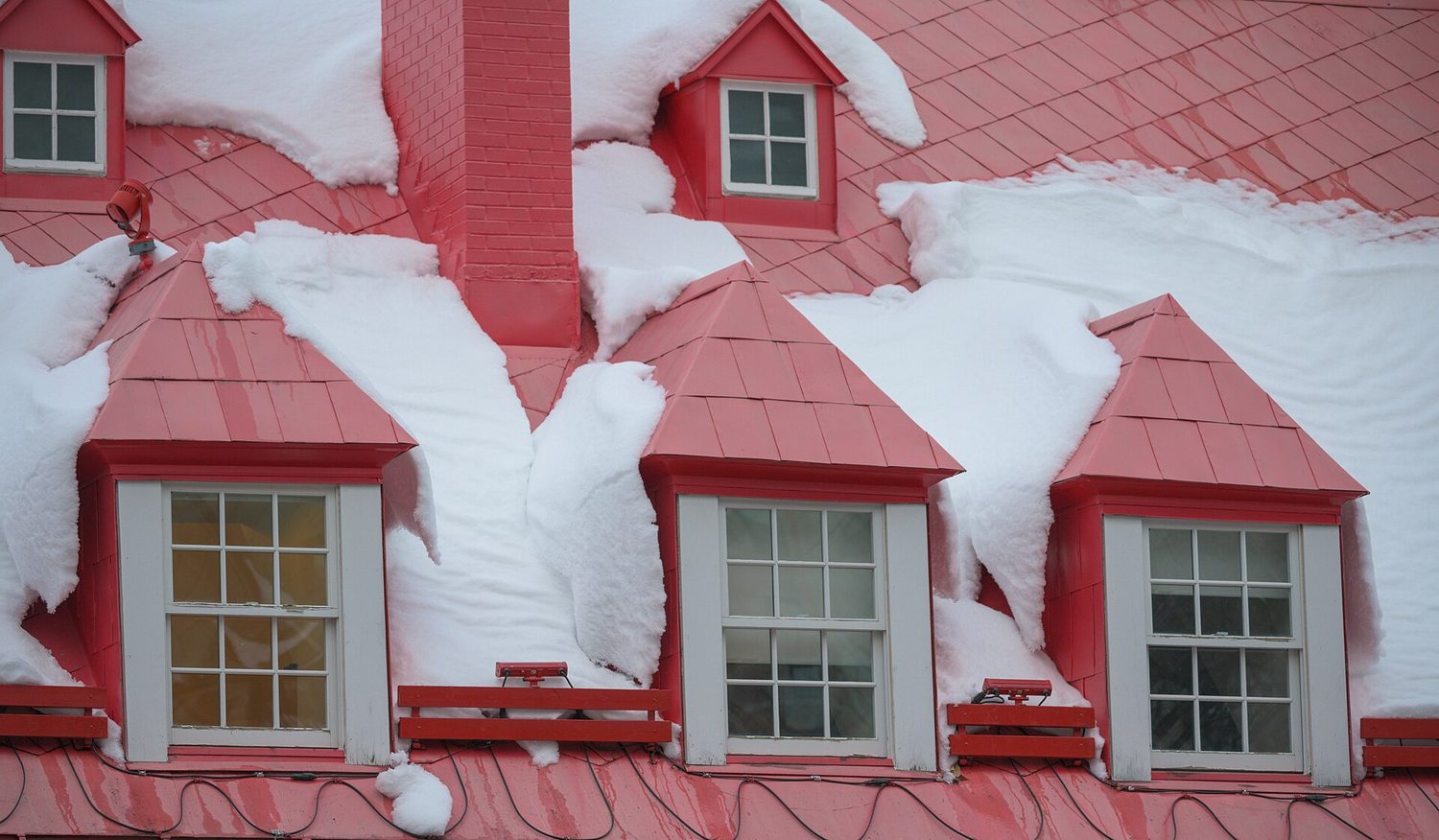
The behaviour that reduces ice dams is the same behaviour that drops a roof's worth of snow at once. On a metal roof that release is sudden and it is heavy — enough to injure somebody, crush a shrub, bend a railing or damage a propane tank.
Snow guards belong wherever that matters: above entrances and walkways, over decks and patios, above propane tanks and outdoor units, at gable ends over a neighbour's drive, and above anything you would not want a hundredweight of ice landing on.
Roughly $1–$3 per square foot of the area being protected. On most Lakes Region houses this is not an upsell — it is part of the design, and it belongs in the original quote rather than in a conversation after the first slide.
Where you may genuinely not need it: an open field elevation with nothing beneath the eave but lawn. We will say so rather than fit guards around a whole roof out of habit.
Diagnosis First
- Look in the attic on a cold day, with a light. That is where the answer usually is, and it is not a roofing inspection.
- Establish whether snow melts off your roof while it stays on the ground. That single observation is the clearest indicator of heat loss there is.
- Find the local causes — a bathroom fan venting into the attic, a recessed light cluster, a dropped soffit over a bay, a section where insulation was disturbed. Localised dams are often the cheapest to fix because the cause is one identifiable thing.
- Say plainly when the answer is insulation and point you at somebody who does it. We do not do air sealing and we will not pretend a roof substitutes for it.
- Detail the eaves properly when we do re-roof — ice-and-water membrane where it matters, and ventilation corrected while the deck is open.
- Design the snow retention around what is actually beneath your eaves.
Questions
Are heat cables a solution?
A symptom manager. They keep a channel open so water can escape, which prevents damage, and they do nothing about the heat loss causing the dam while adding running cost every winter. Reasonable as a stopgap while you arrange the real work, or as a last resort where the real fix is genuinely impractical — a complex cathedral ceiling with no room for ventilation, say. Not a repair.
Should I rake my roof?
Clearing the first few feet above the eave after a heavy fall does reduce dam formation, and it is a reasonable thing to do from the ground with a proper roof rake. Do not get onto a snow-covered roof — people are seriously injured every winter in this region doing exactly that, and a metal roof under snow is as slick as anything you will ever stand on.
Can I chip the ice off?
No. Not with a hammer, a shovel or an axe. You will damage the roofing, the flashing or yourself, and the ice will be back within a week because nothing about the cause has changed. If water is actively coming inside, the useful emergency measure is to clear snow from above the dam so less meltwater is being produced.
Are icicles the same as ice dams?
Not necessarily. Icicles can form from ordinary solar melt on a mild sunny day with no heat loss at all. What indicates a dam is a ridge of ice sitting on the roof surface at the eave, stains appearing inside at the top of exterior walls, or icicles that keep growing through a cold spell when the air never rises above freezing.
My insurance paid for the damage. Does that solve it?
It pays for the ceiling; it does not change the roof. A claim is worth making and it is also a signal that the mechanism is still there and will produce another one. Insurers take an increasingly dim view of repeat claims from a known unaddressed cause, which is a practical reason to fix it rather than a moral one.