
Fifty Years of Roof
This is the case for metal in one picture, and it is the only case worth making. Everything else — the look, the noise question, the resale claims — is secondary to how many times you do this.
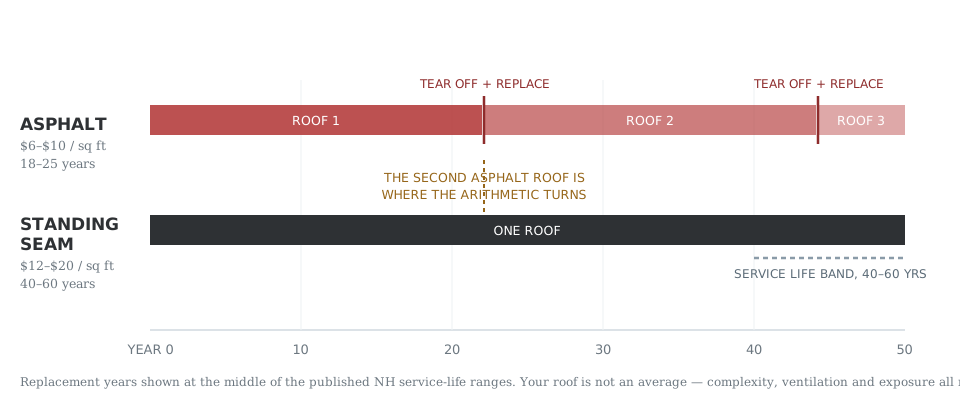
- Asphalt $6–$10 per sq ft installed in NH — 18–25 years, up to 30 on premium architectural
- Standing seam $12–$20 per sq ft installed — 40–60 years commonly published for NH
- Freeze-thaw is the mechanism — repeated freezing cracks asphalt binder and loosens granules; metal expands and contracts without cracking
- The turn is the second asphalt roof — that is where the arithmetic stops being close
And if you are selling in three years, none of this applies to you and asphalt is the right answer. We will say so.
SourcesNew Hampshire installed cost bands and service-life figures, 2026. Every number on this site is collected with its source on the cost page.
A Metal Roof Does Not Prevent Ice Dams
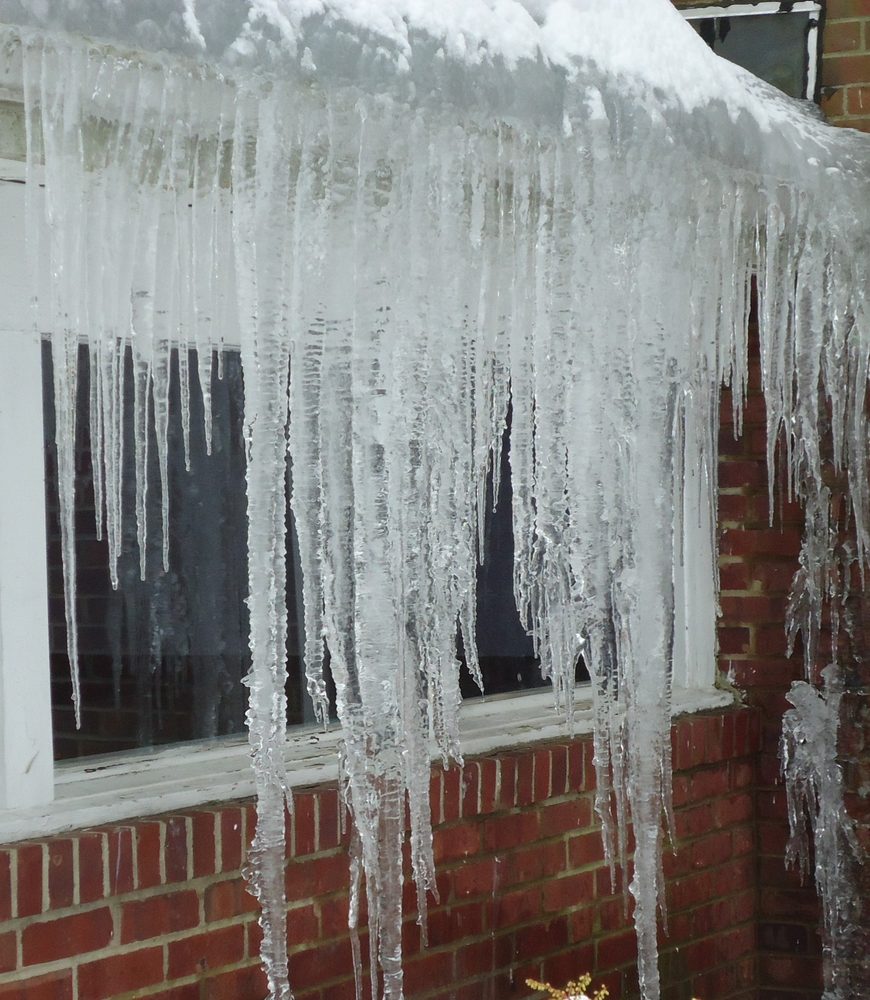
Here is the mechanism, because almost nobody selling roofs will explain it to you:
Heat escapes from the house into the roof assembly. That heat melts the underside of the snow sitting on the roof. The meltwater runs down the slope until it reaches the eave — which overhangs unheated air and is therefore cold — and refreezes. That ridge of ice grows, and the water backing up behind it finds its way under the roofing.
Nothing in that sequence depends on what the roof is covered with.
So does metal help? Genuinely, yes — by a different route. A metal roof sheds snow, and snow that has left the roof cannot melt on it. Less fuel, smaller dams. That is a real benefit and it is not a fix.
A badly air-sealed, badly ventilated house under a metal roof still forms ice dams. We have seen it, and the owner had been told otherwise by whoever sold them the roof.
The actual fix, in order: air-seal the ceiling plane so heat stops getting into the roof assembly, insulate adequately, ventilate so the underside of the deck stays close to outdoor temperature. Then roof. Do it the other way round and you have paid five figures for something that does not solve the problem you bought it for. Work out which situation you are in →
Complexity, Not Square Footage
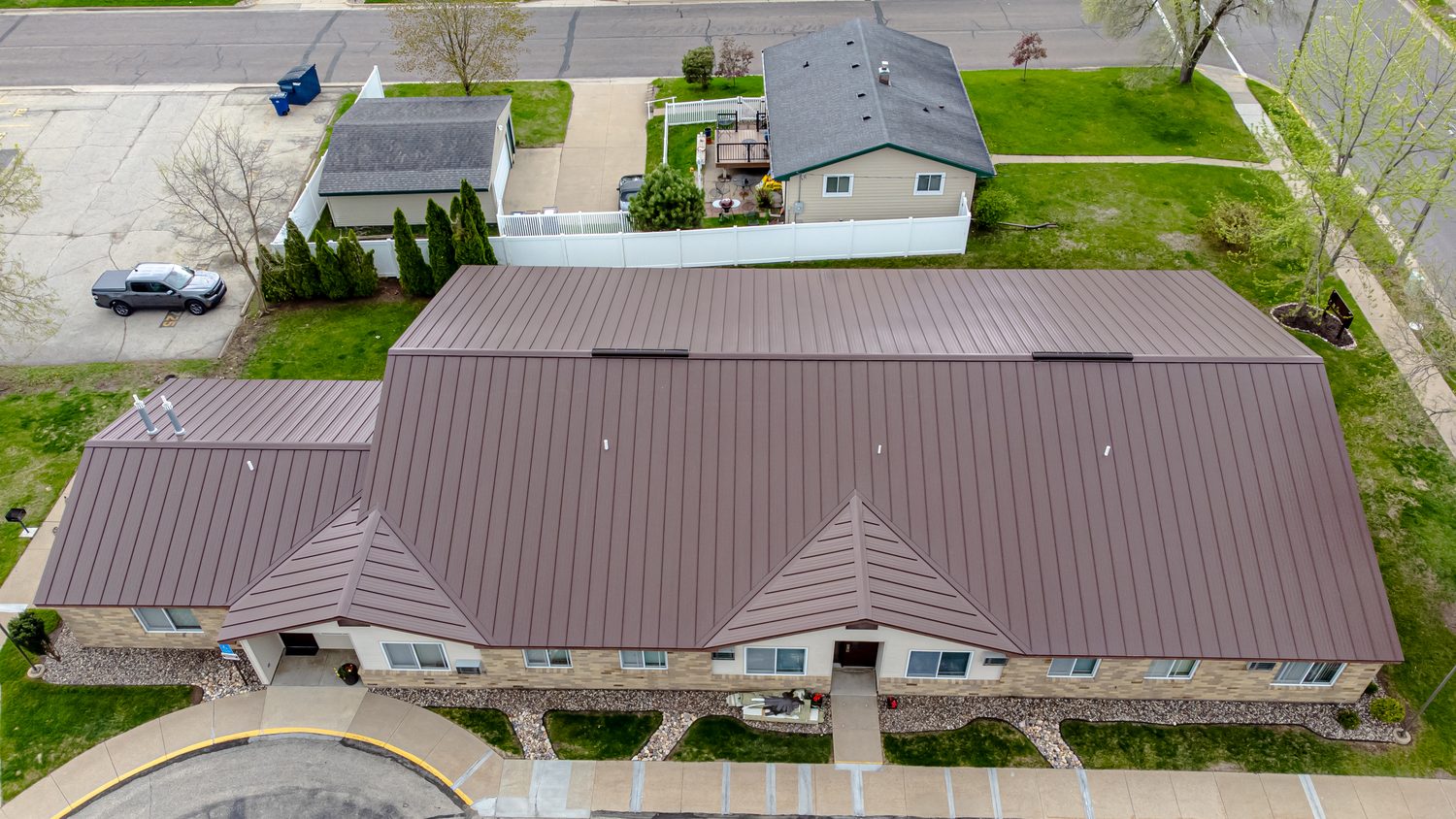
Two Lakes Region roofs of identical square footage can differ by half again in price, and the difference is not in the panels.
Roof area is not house footprint. Multiply the footprint by roughly 1.06 for a shallow pitch, 1.25 for a moderate walkable pitch, or 1.45 for a steep one. A quote that starts from your floor area has not started from your roof.
And then complexity does the rest. Valleys, dormers, hips, chimneys, plumbing stacks, skylights, and the junctions where a connected ell meets a house — that is where the labour and the flashing are. A simple gable runs long uninterrupted panels. A converted camp with four additions runs short panels into six different valleys.
Which is why we price the roof rather than the footprint, and why photographs are more useful to us than any measurement you can send.
What It Costs Here
| Material | Per sq ft installed | Typical 1,600 sq ft roof | Service life |
|---|---|---|---|
| Galvalume standing seam | $12–$16 | $19,200–$25,600 | 40–60 years |
| Aluminium standing seam | $14–$20 | $22,400–$32,000 | 40–60 years |
| Copper standing seam | $25–$40 | $40,000–$64,000 | Longest of any |
| Steel metal shingles | $8–$14 | $12,800–$22,400 | Long, profile-dependent |
| Exposed-fastener panel | $5–$12 | — | 25–40 years |
| Asphalt shingle | $6–$10 | $9,600–$16,000 | 18–25 years |
| Snow retention, added | $1–$3 | — | — |
Four Services
Standing Seam Metal
Concealed clips, panels that move with temperature, nothing penetrating the weather surface in the field of the roof. 40–60 years. The flagship and the reason this site exists.
Asphalt to Metal
The fifty-year arithmetic run on your actual roof — including the cases where it does not favour metal, which we will tell you about rather than talk you past.
Snow & Ice
Ice dams diagnosed before anything is sold, snow retention designed for where a slide would actually land, and an honest answer when the problem is insulation.
Asphalt Roofing
Sometimes the right call. Architectural shingle, ventilation corrected during the re-roof, and no pressure toward the larger number when it is not warranted.
Which Is the Point, and the Catch
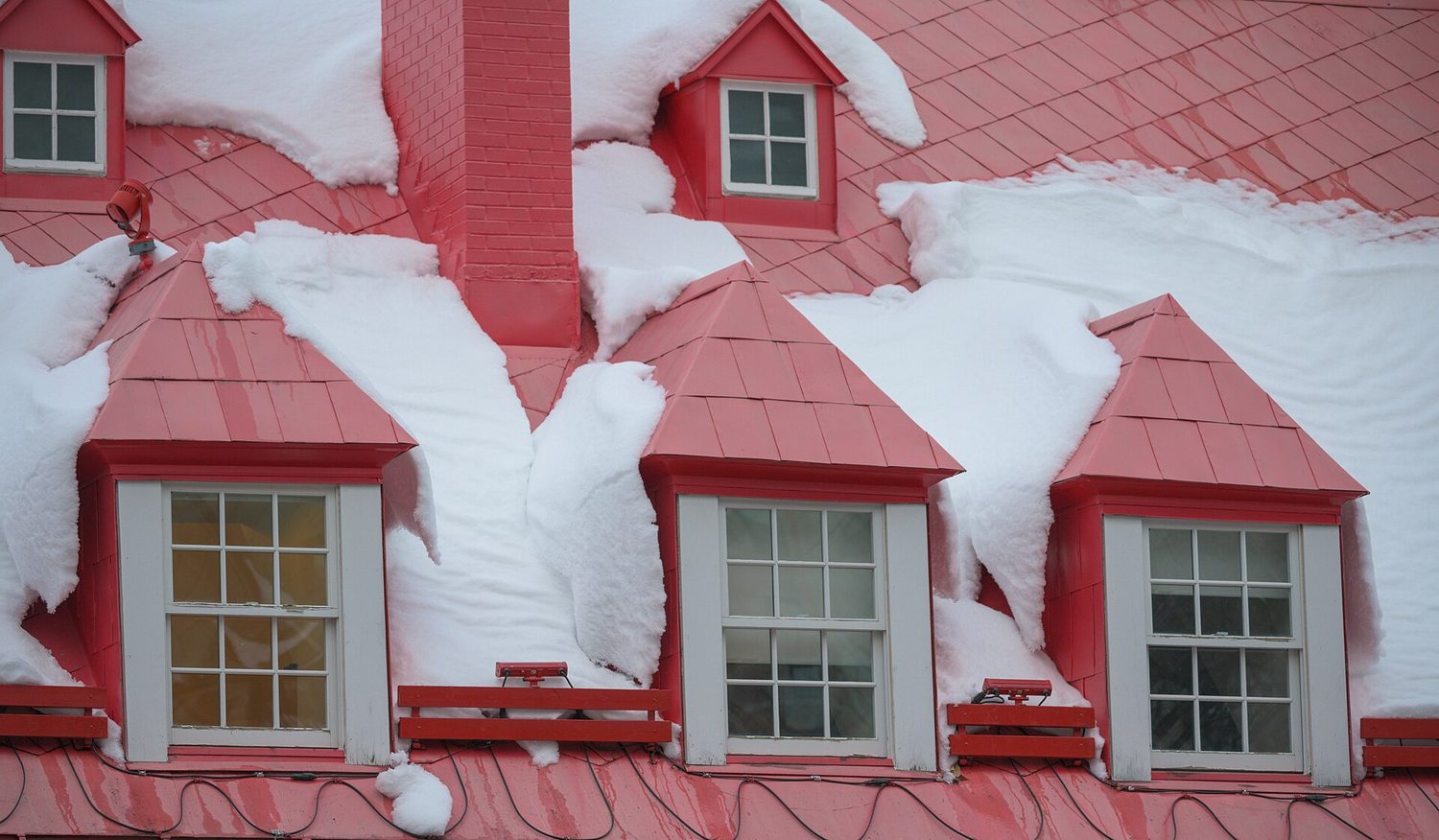
Look at what is actually happening in that photograph. The snow has released in sheets and slid, which is the behaviour that reduces ice dams and keeps load off the structure. That is the benefit.
Now look at the bars below the dormers. Those are snow guards, and they are there because a full roof's worth of snow releasing at once has to be controlled if anything below matters — an entrance, a walkway, a deck, a propane tank, an outdoor unit, a neighbour's drive.
Snow retention runs about $1–$3 per square foot of protected area. On most Lakes Region houses it is not an upsell; it is part of the design, and it belongs in the original quote rather than in a conversation after the first slide.
Work It Out Before You Call Anyone
Cost Calculator
Footprint, storeys, pitch, complexity and material in; a realistic installed range out. It converts footprint to actual roof area, which most calculators quietly skip.
50-Year Comparison
Your roof size and what is on it now. Cumulative cost across fifty years for both materials, with the crossover year marked.
Ice Dam Check
Answers whether your problem is a roofing problem at all. A fair number of people who run it are told to call an insulation contractor instead.
The Questions People Actually Ask
Is a metal roof noisy when it rains?
Not over a solid deck with underlayment and an insulated assembly beneath it, which is how a house roof is built. The noise people remember is from panel screwed to open purlins over an uninsulated barn — a completely different construction with nothing between the panel and the space below.
Will it attract lightning?
No. Metal does not attract lightning; height and location do. If a metal roof is struck it is non-combustible and conducts the charge, which if anything is better than the alternative. This is the most persistent myth in the trade and it has no basis.
Can my framing take the weight?
Almost always, and the surprise is usually which direction. Metal is lighter than asphalt, not heavier — standing seam steel is a fraction of the weight per square of a shingle roof. The framing question that does come up is on old barns and connected ells where the structure has been modified over the years, and that gets looked at rather than assumed.
Does it make the house hotter in summer?
The reverse, generally. Metal reflects rather than absorbs, and a light or reflective finish measurably reduces solar gain compared with dark asphalt. In this climate it is a minor benefit next to the winter behaviour, but it is not a cost.
Can metal go over my existing shingles?
Sometimes, and it is rarely what we recommend. Leaving the old roof on means nobody sees the deck — the single most useful thing a re-roof reveals — and it complicates the eave and ventilation detailing that matters most here. Check your building department too; rules on layers vary.
What about the colour fading?
Modern coatings hold colour far better than they did, and there is a real difference between finish systems that is worth asking about specifically. Darker and more saturated colours show fade sooner than lighter ones, which is worth knowing before choosing barn red for a roof you intend to keep for fifty years.
Metal Roofing Across the Lakes Region
Each town page covers the roof forms that dominate there, the exposure, and what drives the price locally.